REPORT ON THE VALIDATION WORKSHOP OF THE BUSINESS AND HUMAN RIGHTS CURRICULUM AND TRAINING MANUAL FOR BUSINESSES IN KENYA
Date: 19th–20th May 2025
Venue: A & L Conference Centre, Machakos
Organized by: Kenya National Commission on Human Rights (KNCHR)
1. Introduction
The Kenya National Commission on Human Rights (KNCHR), in collaboration with various stakeholders, held a two-day validation workshop to review and validate the Business and Human Rights Curriculum and Training Manual for Businesses in Kenya. The objective of the workshop was to ensure the curriculum and manual are comprehensive, contextually relevant, and aligned with national and international standards on business and human rights.
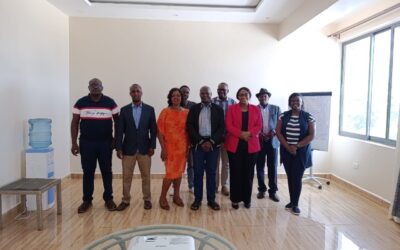
Dr Wamalwa (third left), Ms Lynette Otwori (an Acting Director at Kenya School of Government) with KNCHR staff during a workshop for the development of the KNCHR Curriculum on Business and Human Rights and its training guide.
2. Background
Kenya has made significant progress in institutionalizing human rights in business practices, particularly through the adoption of the National Action Plan (NAP) on Business and Human Rights, formalized in Sessional Paper No. 3 of 2021. This framework aligns with the UN Guiding Principles on Business and Human Rights (UNGPs) and focuses on five thematic areas:
- Land and Natural Resources
- Labour Rights
- Revenue Transparency
- Environmental Protection
- Access to Remedy
The validation of the curriculum and manual marks a strategic step in operationalizing these frameworks within the private sector.
Commissioner Wamalwa giving his remarks on DAY TWO of the event.
3. Opening Session
The workshop officially commenced with remarks from Commissioner Dr. Dennis Wamalwa of KNCHR. He emphasized the transformative role of the curriculum and training manual in equipping businesses with the necessary knowledge, tools, and standards to uphold human rights in their operations. Dr. Wamalwa acknowledged the technical teams, curriculum development experts, and the Embassy of Norway for their contributions and supportDR. WAMALWA REMARKS AT ….
4. Workshop Objectives
- To review and validate the draft curriculum and training manual on business and human rights.
- To ensure the content reflects the Kenyan business environment and the human rights landscape.
- To gather input from stakeholders for finalization and rollout.
5. Methodology
The workshop adopted a participatory approach. Facilitators guided discussions through structured sessions including plenary reviews, group discussions, and presentations. Specific chapters of the curriculum and manual were reviewed for clarity, relevance, and applicability.
6. Programme Overview
Day 1 – 19th May 2025
- Review of the curriculum modules:
- Module 1: Introduction to Business and Human Rights
- Module 2: Legal and Policy Frameworks
- Module 3: UN Guiding Principles
Day 2 – 20th May 2025
- Review of training manual chapters:
- Chapter 2: State Duty to Protect
- Chapter 3: Corporate Responsibility
- Chapter 4: Access to Remedy
- Chapter 5: Indicators and Compliance Monitoring
- Concluding Session: Way forward and wrap-up remarks by Director Anne Okutoyi and Mr. MwendaProgramme for Review of….
7. Key Highlights from the Documents
Curriculum Objectives:
- To enhance corporate accountability and integration of HRBA (Human Rights-Based Approach) in business operations.
- To provide a structured framework for evaluating human rights risks and implementing due diligence mechanismsDraft Curriculum for HR….
Manual Features:
- Includes real-world case studies (e.g., Rana Plaza, Kakuzi, Safaricom) for practical context.
- Emphasizes cross-cutting issues such as gender, disability inclusion, child protection, and environmental responsibility.
- Offers training methodology, assessment tools, and action planning templates.
8. Outcomes
- The curriculum and manual were unanimously validated with inputs provided for contextual refinement.
- Recommendations were made to include sector-specific guidelines for SMEs, stronger emphasis on digital human rights, and enhanced grievance mechanisms.
- A roadmap was adopted for piloting the materials through regional trainings and e-learning platforms.
9. Acknowledgements
KNCHR extended appreciation to:
- The technical teams and consultants involved in content development.
- The Kenya School of Government for technical support.
- The Embassy of Norway for financial and logistical backing.
- All stakeholders who participated in the validation sessions.
10. Conclusion and Way Forward
The validation workshop was a significant milestone in mainstreaming human rights in business practices in Kenya. The finalized curriculum and manual will be rolled out in capacity-building sessions targeting businesses, regulators, and other stakeholders. KNCHR committed to continuous monitoring and periodic review of the training materials to reflect evolving trends and feedback from implementation.